
Beyond appearances, rare genetic disorders can manifest through unusual dental symptoms. Find out how signs such as frailty, discoloration or abnormal sensitivity can be early indicators of underlying conditions.
How to recognize amelogenesis imperfecta?
A tooth enamel abnormality: the Achilles heel of your teeth
Your teeth are like natural fortresses, and l’enamel constitutes them protective rampart. When we talk about amelogenesis imperfecta (HAVE), this natural barrier presents training defects, becoming fragile even non-existent in some cases. We then observe one reduced thickness, a abnormal porosity or one deficient mineralization, leaving her dentin without protection against external aggression.
Dental changes visible to the naked eye
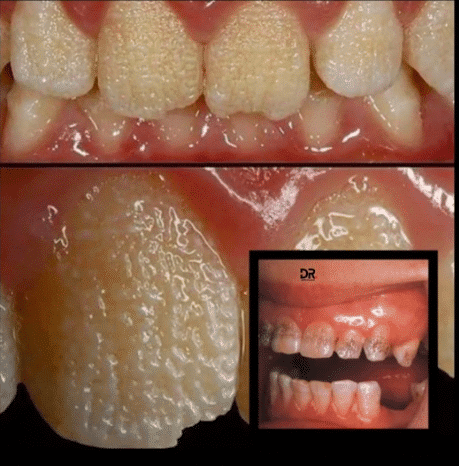
Teeth affected by this pathology often present distinctive features : yellow to brown coloring, irregular texture, abnormal transparency or tendency to crumble. Beyond the unsightly appearance, these signs reveal a serious dental health problem, because these teeth are particularly vulnerable to cavities, sensitive and fragile.
Some forms of AI are light, while others can seriously handicap the masticatory function, transforming each meal into painful ordeal.
Exacerbated tooth sensitivity

A simple sip of a cold drink or a bite of a hot dish causes unbearable throbbing? This overreaction explained by the enamel deficiency, which directly exposes them dental nerves to normally filtered stimuli. The consequences? Intense pain, difficulty eating and sometimes dietary restriction.
This hypersensitivity can be controlled with a adapted support, especially in young patients where the diagnosis can be established as soon as the rash occurs temporary teeth.
Diagnosis: the importance of early detection
Amelogenesis imperfecta being a condition genetic, it is frequently transmitted from parent to child. When an adult has teeth particularly sensitive or discolored, it is crucial to have those of your descendants examined preventively. A in-depth clinical assessment, sometimes accompanied by a x-ray, is usually enough to confirm the diagnosis.
A quick identification allows one more efficient management, thus avoiding them secondary problems like the severe cavities or them persistent functional disorders.
Therapeutic options for amelogenesis imperfecta
If this condition cannot be eradicated, miscellaneous therapeutic approaches offer one satisfactory quality of life :
- Dental prostheses (facets or crowns) for consolidate and save affected teeth.
- Specific fluorinated applications : aiming to strengthen dental structure.
- Preventive seals for protect against cavities.
- Close dental check-ups with a personalized tracking.
In some situations, a orthodontic treatment may be necessary if dental development is compromised.
Oral hygiene: the pillar of prevention
Adopt one rigorous routine including a twice-daily brushing with a fluoridated toothpaste, limit sweet or acidic products, and consult your dentist regularly represent them fundamental measures to maintain good oral health despite amelogenesis imperfecta.
To conclude
Amelogenesis imperfecta is not just a simple one dental particularity. This is a rare hereditary pathology requiring special attention. Between increased sensitivity, enamel deficiency, discomfort... of solutions exist to deal with this affection on a daily basis.
If you notice any dental anomalies at home or your children, consult without delay. The earlier the diagnosis, the better the outlook.


